
Episode #395
Are you building wealth…or just feeding the machine?? A conversation with Nathan Hayes on investing capital in your practice
June 1, 2026
What if one of the biggest financial mistakes practice owners make is confusing “spending money in the practice” with actually investing in it? In this episode, I’m joined once again by Nathan Hayes for a thoughtful and nuanced conversation around reinvesting in your practice, opportunity cost, and the hidden tradeoffs owners often overlook when deciding what to do with excess cash flow.
We explore the mindset many owners have that every dollar spent on equipment, technology, or expansion automatically creates enterprise value — and why that assumption can quietly create long-term financial consequences if it’s never challenged. Nathan and I unpack the difference between true investment versus simply adding expense, how owners should think about ROI inside the practice compared to investing outside the practice, and why many of the highest-value drivers in a business have nothing to do with buying another piece of equipment.
We also discuss:

Start Planning Today
Don’t miss out on exclusive access to financial tips, strategies, and expert-led webinars. Subscribe to the “Planning Life, On Purpose” newsletter today and stay ahead of the planning curve!
- Why more equipment does not automatically mean a more valuable practice
- The hidden opportunity cost of continually reinvesting back into the business
- How enterprise value is actually created in an optometry practice
- The difference between spending, investing, and simply staying operational
- Why patient flow and schedule utilization matter more than most owners realize
- The role marketing can play in growing enterprise value versus buying more technology
- How practice owners should think about free cash flow after taxes, debt service, and reserves
- The dangerous feedback loop created by depreciation-driven purchasing decisions
- Why many owners underestimate the value of investing outside the practice
As always, we close the conversation with practical NBSs (Next Best Steps) to help owners think more intentionally about capital allocation decisions both inside and outside their practice.
Resources:
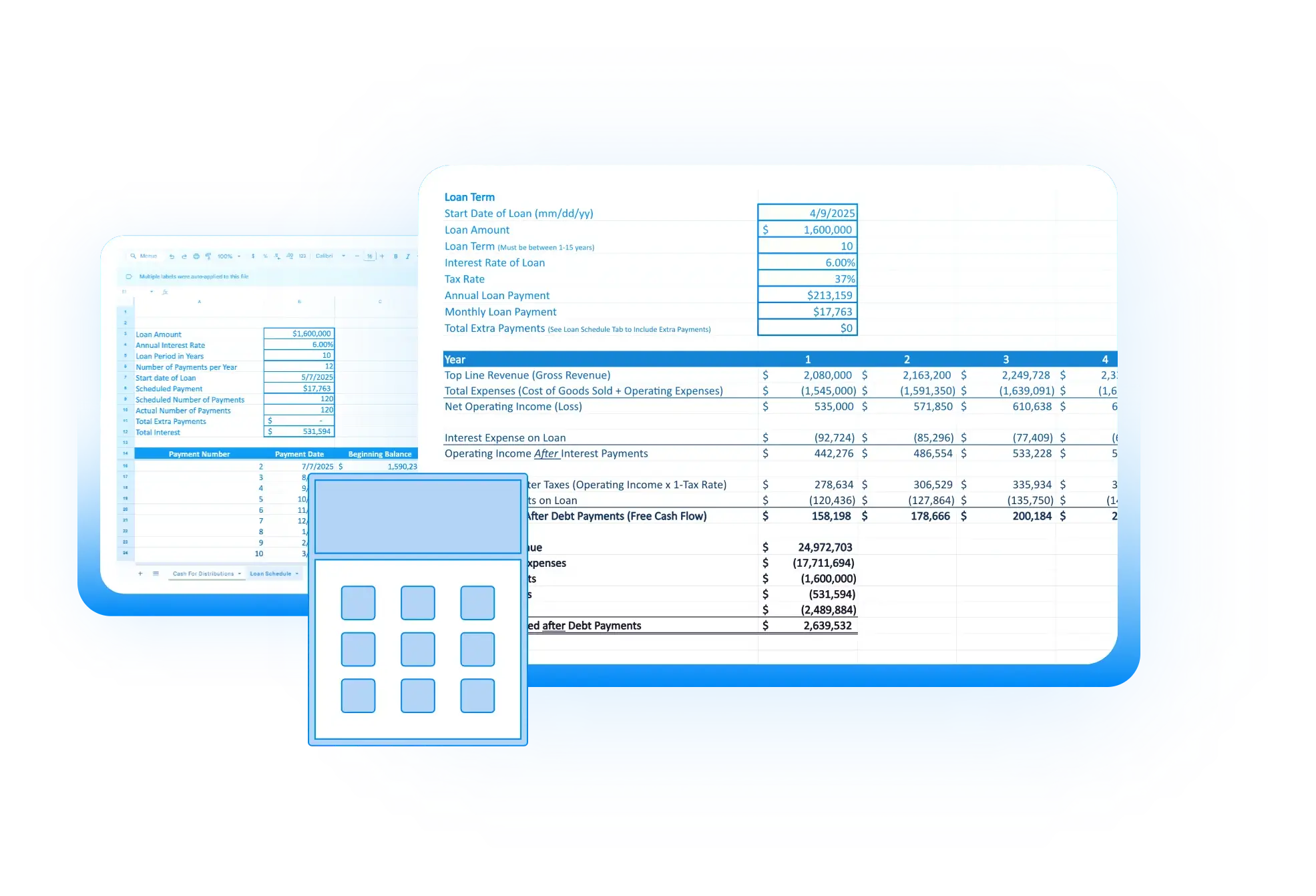
Download the Practice Owner’s Financial Toolkit
20/20 Money Ultimate Financial Success Masterclass
OD Mastermind Interest Form
Check out Adam’s new book: How to Buy an Optometry Practice
Four Levers in Retirement
IDOC
Simple Numbers, Straight Talk, Big Profits!
Simple Numbers, Straight Talk, Big Profits with Greg Crabtree
—————————————————————————————
Please rate and subscribe to 20/20 Money on these platforms
Spotify
—————————————————————————————
For past episodes of 20/20 Money with full companion show notes, please check out our episode archive here!
Check out Adam’s other podcast!
The Optometry Success Podcast
Subscribe on Apple Podcasts: https://bit.ly/4tttng6
Subscribe on Spotify: https://bit.ly/4tuf0YM
Episode Transcript
Adam Cmejla (00:01.674)
Welcome back to another episode of 20/20 Money, The Business of Optometry joining me back on the show, Nathan Hayes with IDOC and Books & Benchmarks. Nathan, always good to see you, my friend. Thank you for sharing in today’s conversation.
Nathan Hayes (00:15.702)
I always have fun on these. It’s like the highlight of my week this will be, so.
Adam Cmejla (00:19.374)
I know. I love our dialogues. I love our conversations I love that we explore topics that we both know the relationships we work with are thinking about and what I like about our the roles we play in our relationships’ lives. There’s a lot of similarities to it But I think we both think of it just in a different enough way that it makes for interesting conversation, which I’m Really excited to explore a topic with you here today on.
Nathan Hayes (00:48.544)
Yeah, this will be good because it’s a little more in your wheelhouse than mine. Well, I don’t know whose wheelhouse it is, we both toe into each others sandboxes.
Adam Cmejla (00:52.596)
I know that’s the fun of it, right? All right, so let me just, yeah, let me kick things off because this is, and you’re right, think admittedly from as we were messaging back and forth about the idea that’s been on my mind for a while, and I’ll illustrate a specific example in our firm. with a recently, I think they’ve been with us now for about six months or so, this new client relationship. And I’ll kind of rip the Band-Aid off with the, dare I say, fallacy that I’ve observed and then explain kind of back end into what I want to explore with you here today. So this is a practice owner that has owned the practice for close to 20 years. And the fallacy that we have observed in a short amount of time is their consistent belief intention, almost a conviction, that every single dollar that they spend in the practice is generating a return on investment.
Nathan Hayes (02:00.438)
Wait, wait, so let me just make sure I understand that. They believe that every time I… yeah, okay. So does every dollar I spend have a one-to-one return on investment like I’m paying $60 a month for QuickBooks, I want an ROI? Or is it like, hey, when I have choices about what to do with free cash flow, on almost all cases, the best choice is to buy something for the practice.
Adam Cmejla (02:07.867)
They always use the word while I’m investing back into the business.
Adam Cmejla (02:30.132)
Yes, the latter, the latter. And where I’m going with this from my point of view, the thing that we always talk about and I know as I’m formulating the thoughts in my mind, this is gonna sound like a commercial for our firm. Maybe it is, but that’s not intentionally why I’m going this way. All right, let’s just call it what it is. The reason that we do what we do and the…
Nathan Hayes (02:48.768)
Didn’t start a podcast for nothing, Adam.
Adam Cmejla (02:59.736)
The genesis behind the name of the firm integrated is that I realized years ago when I was talking with practice owners or business owners for that matter, even before the specialization in optometry, that it’s really difficult to talk to a business owner about their personal life if you’re not also talking about the business because the business influences the goals on the personal side and the personal goals influence what we’re doing in the business, which formulated this idea and the concept that we have in the practice in our firm about helping owners build and manage and run intentional practices. How this manifests itself from a planning perspective is inevitably every practice owner owns a business for the cash flow to A, support and sustain their quality of life today. But hopefully there is going to come a time when they want to exit stage left and retire and exit the practice. And as John in our office says, do what you want, when you want, with whom you want, which is in short, the definition of retirement. In order to retire, and if the income stream from practice ownership goes away because we exited the practice through a liquidation event, we have to have a certain, or if you close it, exactly, I mean, because that is a stark reality that happens with practices as well. Not every practice actually sells. So if we exit ownership in whatever manner we do, inevitably, in order to sustain our quality of life that we want in retirement, Nathan Hayes (04:07.39) Or if you close it, for that matter. I mean, if you’re…
Adam Cmejla (04:26.976)
It’s gonna require income. The whole goal of having assets on our balance sheet, if anybody has read Rich Dad Poor Dad and The Four Quadrants of Cash Flow that Kiyosaki talks about, assets eventually are supposed to turn and spit off income. So the whole goal of accumulating a personal balance sheet that has assets on it, whether that be in real estate or business enterprise value or good old stock and bond portfolio, is to eventually turn.
Nathan Hayes (04:52.648)
Or just a lot of cash. Adam Cmejla (04:54.73) or just a lot of cash, right? Who knows grandma that has rolling CDs and rolling CD, or savings accounts, right? Any asset that we have on our balance sheet, we eventually need to figure out how we turn that into income. And a whole separate discussion would be around normal distribution rates out of portfolios. Should it be static? Is it dynamic? What is that percentage, et cetera? But whatever, we need to have… fundamentally every practice owner, every person — not even just every practice owner, every person that wants to eventually retire will fundamentally have to ask themselves the question and answer it on an after-tax monthly basis, how much do I need to live the quality of life that I want to live? From that point, now we can start reverse engineering the financial equation to say, well, if you need X dollars per month after tax, That translates into an annual amount. If we gross up for taxes, that’s here’s your gross pre-tax amount. And then based on the distribution percentage of how much we’re taking out of the portfolio, we’ll have to have Y number of millions of dollars in our portfolio. Now, if we know that target number, now we can start reverse engineering based on your age today. One of the episodes that I did years ago, which I’ll put links in the show notes of this episode, which is Basically, I think it was titled the four levers of retirement planning or the four levers to pull in retirement planning. Now it comes down to the very simple calculation of the time value of money. I have X number of years to save. I’m figuring in a certain rate of return of those dollars. I can save X number of dollars per month to target a number of millions of dollars. That’s the easy part. where this conversation, where I’m curious to unpack this with you here today. And the reason I say that’s the easy part is because it’s formulaic. And at least from a rate-of-return standpoint, we have over 100 years of market data that shows that if you invest dollars in a broadly diversified, low-cost, tax-efficient portfolio, it should yield somewhere between this percent and this percent, 7 to 9%, 10%. Again, pick your return. Adam Cmejla (07:06.54) There’s a largely accepted data set out there that says one of those variables is pretty predictable. That doesn’t exist in private practice. Well, to borrow a phrase, it does, but it’s certainly open for discussion, which is why I’m excited to share in this dialogue with you today. So practice owners, when we’re talking about what to do with free cash flow in the business after expenses have been paid, after debt service, after whatever else has to be covered. This is free cash flow, right? It’s not tied to anything right now. Fundamentally the…
Nathan Hayes (07:38.144)
So just pause really quick just to number these from our favorite accounting book, Simple Numbers, Straight Talk, Big Profits. Of the profits in your business, there are four places they go and then they go in this order. They go to the government first in taxes, do not not pay taxes. They go to the bank or your creditors second.
Adam Cmejla (07:41.933)
Yes.
Adam Cmejla (07:45.773)
Yes.
Adam Cmejla (07:51.309)
Yes.
Adam Cmejla (07:55.534)
Do you really insert a double negative in our conversation? Sorry.
Nathan Hayes (07:59.542)
Did you have one of those recently? I’ve had them. Adam Cmejla (08:03.83) All right. I didn’t mean to interrupt for re yeah. Yes. Yeah.
Nathan Hayes (08:06.602)
Wouldn’t be the first time someone hasn’t paid taxes. Just put it that way. Not a good idea. Second force is debt service. You got to pay back your loans. Third is leaving appropriate amounts of cash in your business to fund its operations. And then any extra money beyond what the practice needs to fund its next month or two of operations, whatever your reserve targets are, that’s free cash that you can take out and do with.
Adam Cmejla (08:31.564)
And that’s the fundamental conversation that we’re having here today. We’ve got one through three taken care of, accounted for, booked, like out of sight, out of mind — that we’ve been intentional with those three forces. It’s the fourth one that I think in coming back to the avatar or the genesis of this dialogue, why this has been kind of turning my mind with this relationship that we’ve been serving for about six months is the observation of what we’ve heard this practice owner say and how it hasn’t translated to the financial performance of the business. Because we’ll consistently hear them say, well, I’m investing back into the practice. And then when we look at the trailing revenues of the practice and the trailing net income, which, again, as we all know, revenues can be deceiving in the way that I don’t care what you make, I care what you keep. I know that’s very binary and isolating in and of itself. At the end of the day, if we come back to this and be intentional with the cash flow in the business, we have to truly understand, are we getting what we say? I’m investing back into the practice. Are you? Or are you just spending in the practice? Because I think there’s a really big difference behind that, or between those two things.
Nathan Hayes (09:53.408)
So what sorts of things are they investing in for the practice?
Adam Cmejla (10:00.175)
They’re buying new phoropters. They’re buying new equipment. This is one that is kind of that has gone down that path of dare I say shiny object syndrome. So There’s red light therapy. There’s IPL.
Nathan Hayes (10:10.005)
Yeah, okay. Yeah, okay. And how are y’all talking to this owner about these choices?
Adam Cmejla (10:23.064)
So this is where the financial therapy, for lack of a better word, comes in, where we are basically, look, I learned years ago from a coach, probably the better part of almost 15 years ago, the mark of a great advisor is not necessarily always in the advice that you give, but the questions that you ask. And so what we are showing them, and this is a practice owner in their late 40s that has saved less, they have less than a hundred thousand dollars saved for retirement.
Nathan Hayes (10:27.232)
Mm-hmm.
Adam Cmejla (10:54.772)
And so we’re showing them, going back to my introduction here, the preamble to this conversation, the easy part of the planning relationship is this is your lifestyle. This is what you’ve shared is important to you. These are the things that you want to do with your family, with your time, et cetera. And in order to make that happen based on your lifestyle today on an after-tax basis, this is what we’re at.
Nathan Hayes (11:13.686)
Mm-hmm.
Adam Cmejla (11:21.122)
We can plan with what we know today. Most people don’t want to take a significant pay cut when they retire because welcome to seven days of Saturday. Life is usually more expensive on a Saturday than a Tuesday. And so we don’t really want to have a massive lifestyle shift. So we plan with what we know today. So we can tell them, this is the amount of money. I don’t care where it is. If you build this practice into a $7 million liquidity event, great. The practice is an asset on the balance sheet. We can use that, but let’s also look at the historical performance of your investment in the practice. And there’s a gap here. Time is becoming, with every additional candle we put on the cake, time is becoming more of their enemy than it is their ally. Nathan Hayes (11:57.76) Mm-hmm. Yeah.
Nathan Hayes (12:07.818)
Right, So we could talk about what drives business value for a minute, right? Yeah. So when you go to value a business for sale, any business, but you really have two factors. You have a benefit stream, whether that’s EBITDA, profits, cash flow, net income, and some sort of multiplier that’s.
Adam Cmejla (12:13.474)
Yeah, and be real about that conversation.
Nathan Hayes (12:36.436)
The inverse to the expected return from an investor. Adam can link a previous conversation that goes way more into depth than that. For the purposes of today’s discussion, I think it’s fair to say that there’s a range of multipliers for any business type that you can shout at the moon all you want. It is what it is. And it’s pretty well understood. CFP® firms like Integrated Planning & Wealth Management have different trading profiles and optometry practices than biotech startups.
Adam Cmejla (12:43.213)
Yes. Adam Cmejla (12:54.84) Mm-hmm.
Nathan Hayes (13:06.622)
Internet companies than construction firms. And again, there’s just a market rate based on the risk profile and growth expectations of different industries that drives that. For eye care right now, there’s kind of two markets in play depending on who you sell to. There’s what you expect selling to another private OD, and there’s a somewhat different expectation if you sell to a private equity backed group, although those will probably start to look more and more similar over time. They already are starting to seem more and more similar. Adam Cmejla (13:33.39) Yeah.
Nathan Hayes (13:37.318)
And then the question is, okay, two inputs, free cash flow or EBITDA or some profitability measure and… and a multiplier. The multiplier, you’re probably not going to change a whole lot. It depends on who’s buying you and it depends on size, health, risk profile of the business. So larger, better staffed, more reasonably equipped businesses will trade for more than smaller, weaker staffed, less established businesses. On a broad range, yeah.
Adam Cmejla (14:08.234)
Mm-hmm. On a broad range, we could probably put guardrails of three to seven times.
Nathan Hayes (14:13.654)
Yeah, basically, yeah, and like call it three to five if you sell to a private OD, five to seven to private equity and a whole other conversation on whether private equity is smart or not smart to spend that much.
Nathan Hayes (14:29.642)
So the question is we have free cash flow and if we spend the money back in the practice, what are we getting out of that? Right? And I think a lot of owners have an intuition that more assets in the practice balance sheet is what drives this business, its value, but the reality is the lowest possible, nightmare-scenario value for your business is the value of your equipment. That’s book value or tangible value. And if you look at your balance sheet, even if you take off depreciation, most practices might have $300,000 worth of assets on their books. And so if we’re going to buy something, the question is, how is that going to translate to increased profits and cash flows? Period, full stop. If it doesn’t change that, that’s not an investment into growth. Now, again, there’s some baseline equipment you’d need. Like if one phoropter goes down, you don’t have business with that lane, you’re gonna replace the phoropter. Your slit lamp goes down, not super expensive, but it’s that. But adding on incremental shiny toys, if it doesn’t translate to increases in revenues and profits, you’ve really just added debt and taken cash out of the business potentially, either or, depending on what you do. And so you have to be realistic when you’re putting money back in of what Again, how many patients are going to use this on? What’s the revenue profile? Is the revenue going up by more than it costs to own it? And on your P&L, this can be a little deceptive because if you pay cash for an IPL and spend $90,000 and just drop it out, unless you do some sort of straight-line depreciation, you’re not really capturing the cost of what that instrument is because you’re going to take a section 179 and like, okay, we had 90,000 off year one and then it’s like free. It’s a free instrument. Adam Cmejla (16:21.71) you Nathan Hayes (16:26.29) And I’ll just say this is a bookkeeping firm at Books & Benchmarks. We’re doing the books for like 175 practices right now across the country, many of Adam’s client relationships as well, which we value deeply. You know, we follow the CPA because we’re doing one set of books, but if you were a larger corporation, you would have two sets of books. You’d have a business set of books, you’d have a tax set of books. And when you buy an IPL and your business set of books, you’re probably going to put that on a seven-year amortization schedule. and depreciate it the same amount month by month. So you’re showing the sort of consumption costs of that instrument until it needs to be replaced. And then on your taxes, you’re just going to deduct it to lower your tax bill. As a practical matter for the practices we serve, that’s a lot of complication for not a lot of return on the businesses. So we just live with it. But keep in mind that your P&L can mask that from what you’re doing.
Adam Cmejla (16:58.478)
Cost of that instrument. Yep.
Adam Cmejla (17:03.426)
Yeah. Assuming that’s the right tax move to make. Yeah.
Adam Cmejla (17:17.518)
Yeah, I feel compelled to insert a public service announcement that taking bonus depreciation or section 179 expensing, depending on what it is, is not always the clear cut answer to your tax and financial planning strategies. If for no other reason, like the easy layup, like why not Adam? That’s what I always get told, like bonus depreciation, yay, best thing ever.
Nathan Hayes (17:37.963)
Yes.
Adam Cmejla (17:46.606)
Yes, but we have to ask ourselves, what is the value of that tax deferral deduction? I wish I could change, I’ve introduced and created a number of different phrases in optometry, which I’m actually pretty proud of. Like we don’t say the R-word, we talk about small-town practices. We talk about NBS, the next best step. I wish that I could normalize that depreciation is a tax. as a tax deduction that is deferred or it’s a tax deferral strategy. It is not a deduction Yes, you deduct it from your taxes But in the concept and in the totality of your lifetime tax bill You are deferring the tax on those dollars spent. So where I’m going with this, I know I’m taking a Diversion here if you’re projected which like I’m taking a little bit of a diversion, but I also think it’s.
Nathan Hayes (18:34.368)
That’s great.
Adam Cmejla (18:42.882)
Very applicable to our overall conversation here because if you are anticipating that the piece of equipment that you are buying, geez, that you are buying is going to increase your revenues and thus profitability of the practice, all of the things being equal, your income’s going up. And so from a value, from a tax value standpoint, just to make the math easy, if that piece of equipment generates enough revenue and enough after-tax profits or enough before-tax profits such that the net income of those dollars are now going to be taxed at 32 % instead of 24%. It may make sense to carry that deduction in years forward on your tax books rather than wiping it all out right now. And yeah, I get you get to celebrate that you had a massive tax deduction on the purchase of equipment. But next year, when the value of that is gone and your CPA tells you that That’s where the whipsaw effect happens because you’re celebrating the fact that your tax bill was so low in the time in the year that you bought your equipment and then it whipsaws in the other direction because now you no longer have that deduction. You no longer have that depreciation. And so what happens? That’s when the visceral correction, which now the now the financial feedback loop kicks in, like, that’s a big tax bill. I think I better know. It’s time to buy another piece of equipment. I need I need another. But you’re laughing, but you know that happens.
Nathan Hayes (19:51.157)
Yeah. And you have more marginal dollars and a higher tax bracket is where you’re going.
Nathan Hayes (20:08.574)
Mm-hmm. yeah. yeah. Adam Cmejla (20:10.87) And which brings us, we’re skipping a step in that equation because we’re in that step that we’re skipping is, does this generate an additional dollar of after-tax profits for us if we spend this capital? Nathan Hayes (20:21.43) Yes, yes, that’s step one. And that’s an important discipline. again, you need to do that. You can find plenty of very complicated spreadsheets for this online, but fundamentally, how many patients am I gonna use this instrument on? What’s the fee for using it? Does the revenue exceed the cost of owning it? If you have a loan, it makes it really easy, because you can look at like, hey, what’s my… monthly payment, am I getting more before the monthly payment? And obviously, hopefully you want a lot more, not just to break even on it. I mean, you can expand that into taxes, but I mean, that’s the math. Did it increase the revenues and profits more than the cost of the equipment? And then there’s the tax planning discussion of also, are we being prudent in how we take the tax deductions on it and how we time it, as opposed to saying, hey, less taxes now is automatically better.
Adam Cmejla (21:10.092)
Yes. Nathan Hayes (21:14.89) which is, and that’s where I’ll just observe from someone who is the data set that’s leveraged by both CPAs and CFPs, having both a financial planner and a CPA looking at your taxes is really a great thing because my experience, oftentimes your financial planners are a little more thoughtful on the big picture and CPAs are sort of hammers looking for the nail of let’s just lower your tax bill as far as possible. Not all CPAs, but many.
Adam Cmejla (21:40.194)
Degree more. Agreed. Yep.
Nathan Hayes (21:44.118)
So to that point and the depreciation piece, the other thing I thought you were going to go to and you didn’t go to is when you sell the business, you’re also going to have depreciation recapture as part of it. So you’re not getting out of paying those taxes forever. just, it’ll come back later.
Adam Cmejla (21:58.862)
I was going to earlier in the conversation, I was going to rain on the asset sale or the book value sale and kind of slide in there. it’s like, and then you got to pay depreciation recapture on just the assets.
Nathan Hayes (22:04.564)
Yeah.
Nathan Hayes (22:08.502)
Yeah. Yeah. Yeah. I saw a balance sheet once that had like 900,000 in accumulated amortization. And I was like, you need to talk to your CPA cause you’re going to like, I’m like a $400,000 practice. And I was like, someone messed up here. Cause number one, you don’t have that much. Number two, like you’re going to have an upside-down transaction that you’re going to owe the IRS more money selling to just leave your business open.
Adam Cmejla (22:18.318)
That’s gonna hurt.
Adam Cmejla (22:25.378)
Mm-hmm. We had that house at last year, two years. I think that was two years ago where it was one of those, deer in headlights is the only word, the only metaphor that comes to mind where that’s exactly what happened. The client was going to be cash flow negative after selling because of the amount of recapture and debt that was on the balance sheet when selling the business.
Nathan Hayes (22:53.984)
Yeah. You usually expect it to be debt. This was pure recapture and just definitionally everyone. So on things you deduct, amortization is how you deduct goodwill in a business or intangible assets and depreciation how you deduct tangible assets. So either one is sort of the same idea. non-cash tax line item that Adam Cmejla (22:58.68) Yeah. wow.
Adam Cmejla (23:14.231)
Mm-hmm. Adam Cmejla (23:23.97) The IRS gives you a benefit for it on the.
Nathan Hayes (23:24.208)
We’ll come back. All that to say though, in your accounting and bookkeeping, balance sheets matter. And that was almost certainly incorrect, but was going to need a CPA to go do a ton of historical digging and say, where did we book something really, really wrong in the past?
Adam Cmejla (23:31.203)
Yeah.
Adam Cmejla (23:40.706)
Yeah, which is worth the investment to do that because that is likely a multiple six figure error. So let’s take this down the figurative timeline a little bit more. And where I’m going with this is, and you mentioned this earlier when we look at.
Nathan Hayes (23:47.232)
So.
Adam Cmejla (24:05.544)
What do optometry practices trade for? If we know that it is essentially we’re buying the predictability of future cash flows at a certain discounted rate today, that’s gonna be the value of that. How do we think about, do we have practice owners think about, all right, for every dollar that I truly invest back into the practice to grow revenues, that’s growing my free cash for my net income, my EBITDA, essentially by this number, and I can multiply that number by three, four, five, whatever that is.
Nathan Hayes (24:34.934)
Mm-hmm.
Adam Cmejla (24:43.884)
I don’t know if this is a, like I’m asking this question, but as I’m asking it, I don’t know if it’s something that we can actually answer, obviously, because, for the Captain Obvious reason, every single practice is different. If I guess what I’d like to point, what I’d like to point out, go ahead. Nathan Hayes (24:57.36) Let’s take this a little different. Let’s think less. Maybe I’m going take a different direction, maybe, and we can come back to yours. So one question is, this impact my multiplier? for most, let’s just, I’m going to stipulate, for most pieces of equipment you buy, it is not going to change your multiplier, period and full stop. Your multiplier is going to be driven by team, by processes, by brand, by patient base. Those are the things that will really affect it. Scale, sustainability of your business.
Adam Cmejla (25:17.006)
Mm-hmm. Adam Cmejla (25:22.67) as I say, sheer size.
Nathan Hayes (25:24.114)
Size. And the size is going to be a function of how easy it is to run and how easy it is to grow. And that’s a people and process and infrastructure question. So if we want to think about like, what’s our ROI on spending this money, my question is just, let’s think simply, like how much, what’s the percentage increase on our profitability that it’s going to have? Let’s take the multiplier out and just say, the thing we can control year in and year out, month in and month out is revenues and profits and cash flows. So. And I think we’re headed towards a substitute good discussion here. So let’s just say that I buy a hundred thousand dollar IPL, I they’re less now and my revenues and profits go up by 4%. Okay. Like that’s not a terrible decision. But if we had not bought that IPL and put that money into investments and they grow at 9%, which was the better choice for your long-term balance sheet? Go.
Adam Cmejla (26:25.197)
You.
Adam Cmejla (26:32.576)
And well, and I think where you’re going with this is and the irony that often gets missed, which one took a lot less work?
Nathan Hayes (26:40.712)
Yeah. Yeah.
Adam Cmejla (26:42.178)
The irony is I hear so many times about, well, find me all the passive income type opportunities. I want to get into real estate. I want to get into short-term rentals. I want to find all these passive income opportunities. And it’s hard to share the answer without a little bit of snark in that the irony is the most boring and passive investment vehicle that exists is a simple old brokerage account. It’s easy. You put money in, you invest, you get dividends and or capital appreciation and or interest off the bonds if you own fixed income in the portfolio and you do whatever else it is that you want to do. If you’re talking about investing back into the practice and buying an IPL, now it’s a matter of All right, what’s the opportunity cost of this? Do we have the space? Do we have to train the staff? How do we communicate this to patients? How do we charge and collect for it? What’s the maintenance? There is much more of a complicated, it is solvable, not like complex, which are unsolvable problems, but it’s a complicated formula, but it can be solved. I guess at the end of the day, to your point, fundamentally it comes down to asking as an owner, asking yourself the question,.
Nathan Hayes (27:56.982)
Mm-hmm.
Adam Cmejla (28:04.033)
What are you solving for?
Nathan Hayes (28:06.026)
Yeah, what, I again, what’s the right investment? I made a note earlier and you can bring us, keep us on topic or we can advert a little bit. I meet a lot of practice owners that have an intuition not just about like instrumentation, but time, that if I just spend more time on my business, I’m gonna get a higher return.
Adam Cmejla (28:25.262)
Mm-hmm.
Nathan Hayes (28:30.934)
And, you know, like a $800,000 practice where the owner was spending 70 hours a week working in and on it. And it’s like, there’s no, there’s no marginal benefit to the next hour after 50 or so.
Adam Cmejla (28:43.682)
I’d hate to do that hourly wage computation. No.
Nathan Hayes (28:46.526)
It’s not pretty. And the thing is, you could have spent 20 hours a week less and gotten the same results.
Adam Cmejla (28:55.704)
Yeah, there’s a diminishing marginal return of every hour invested back into the business. What’s that phrase? It’s not doing things right, it’s doing the right things.
Nathan Hayes (28:58.824)
Yeah. And that’s dollars put back in.
Nathan Hayes (29:05.558)
And some of your return from the practice is getting time back and having an appropriate income and taking control of your time and your free time to, yeah, we’ve got income, but once we’ve done enough to get the income we need, let’s prioritize other things, your experiences and hobbies and family. Adam Cmejla (29:24.12) So. Adam Cmejla (29:28.11) Maybe you drop some bait in the water and I’ll take it and maybe this is where you’re going. Latched on. Hook, line, and sinker. Where you’re going with this, think, is freeing up time. The easiest way to evaluate, or I should say one of the lowest hanging pieces of fruit is the addition of another provider in the practice. Nathan Hayes (29:31.87) I definitely dropped bait in the water.
Nathan Hayes (29:54.624)
Yeah, and I’ll go a different area. think that, so let’s come back to your equipment or investment and stuff for the business. It misses the point of what adds value to the business. It gets the order operations wrong. And it’s, I’d say the same for like instrumentation, time, space. These things don’t fundamentally change the value of your business. You get a bigger office, your business, in theory, maybe it has more growth potential. But I said earlier that the minimum value of a practice is its equipment. And the vast majority of our practice is going to be goodwill. And what is goodwill when you go to sell an asset purchase? There’s like seven asset categories, I think, in the IRS, about three applied optometry, which is equipment, inventory, and goodwill. Because you don’t have intellectual property that you’re selling usually, or brands that are really, you’re not selling Chick-fil-A or Coca-Cola. Yeah.
Adam Cmejla (30:31.555)
Mm-hmm.
Adam Cmejla (30:38.094)
Yeah.
Adam Cmejla (30:47.618)
Yeah. Yeah, I doubt many practices have patents that are part of the asset side of the balance sheet. Yeah.
Nathan Hayes (30:53.406)
Okay, so I you could have some other things, but that’s one in a thousand practices has a patent or more than that. yeah. So, and the best way to understand goodwill is let’s say that you sell your practice for a million dollars, you’ve got $200,000 worth of assets you allocate to assets and maybe $50,000 of inventory just to keep it clean. There’s not a, I’ve seen some people have like formulas goodwill equals X. I’ve seen it.
Adam Cmejla (30:57.548)
Yeah, exactly. Exactly. I was saying that was my point is that most practices obviously don’t have those. Nathan Hayes (31:22.71) It really misses the point. The best way to understand goodwill is goodwill is all the value of a business that isn’t explained by the underlying assets. And for most practices, most of the value of your business is not based on the underlying assets. And what drives that excess value is the patient base and the service suite you provide that translates your patient visits into revenue, profits, and cash flow. And so if you want to increase the value of your business,.
Adam Cmejla (31:24.622)
Mm-hmm.
Nathan Hayes (31:50.615)
The most important thing you could focus on is getting more patience in the door. Nine times out of ten.
Nathan Hayes (32:01.829)
Um, it all actually sit with that for a minute, but nights at like getting growing your patient base is if you want to use that IPL, you’re going to need more patients to use it on. And, and let me, I’ll carry one thought through and then you can respond. we get the order of operations wrong and it’s a bit of a game of leapfrog, but.
Adam Cmejla (32:03.862)
Yeah, so.
Adam Cmejla (32:08.952)
So I… Nathan Hayes (32:20.2) Over the life of your practice, if you want it to increase in value, you have to both grow the patient base and then make sure you have enough capacity to see the patients you’ve attracted to your business and have enough capacity to keep growing. So we grow our patient base, eventually we’re going to need more staff, more space, more lanes, maybe more equipment, maybe two pre-test lanes, and then more doctors over time. And then we fill up all those doctor schedules, fill up all those lanes, then we need more lanes and more doctors and more time and more equipment. But the leading indicator of how much time and money you need to put in your practice is the number of patients coming through your door.
Adam Cmejla (32:54.542)
Period, full stop. Yep.
Nathan Hayes (32:57.491)
And so we’re kind of wide-ranging today because it’s us.
Adam Cmejla (33:02.466)
No, it’s great.
Nathan Hayes (33:05.632)
For many practices, the better investment into growth is gonna be marketing dollars and maybe marketing time networking. And then once you get busy, we can talk about adding the equipment. And if you see an opportunity, I mean, there’s a little bit of a virtuous cycle. You can lead who your patients are and where your revenues come from by your instrumentation. If you wanna lead in dry eye, get the equipment, market it. fill the schedule and generate excess revenues in dry eye space. Or myopia control, get your topographers. There’s a virtuous cycle here, but there needs to be a patient or customer explanation for why we’re buying equipment and not just a more equipment equals better.
Adam Cmejla (33:45.752)
So I love how you finished that thought because it was the thought that I wrote down probably two minutes ago that I wanted to make sure I didn’t forget. and get your thoughts on this, I wonder how much the following statement that I’ve heard from practice owners matters. And I think the hard part is actually measuring it. Our patients love that we have the newest technology. And using that premise, that belief, that hypothesis, dare I say, as a, I’m not gonna say total. But it is certainly a variable in the equation. And there is a percentage attached to it as to the justification of why we as a practice, why I as an owner, are going to continue to spend money on the practice without a true understanding of whether this is truly generating a return on investment or it’s quote unquote, just an expense.
Nathan Hayes (34:24.042)
A snarky quip about that.
Nathan Hayes (34:50.582)
So my snarky response is how do you monetize love?
Adam Cmejla (34:54.092)
Yes.
Nathan Hayes (34:54.838)
Which actually might be a path we don’t want to follow very far.
Adam Cmejla (34:58.678)
I was gonna say, is your wife available? Can she join us for the conversation?
Nathan Hayes (35:05.737)
I’ll bring it back to brass tacks, which is that, okay, fine, your patients really love you. How is that translating to more referrals, more spend per patient, revenues, profits, and cash flows?
Adam Cmejla (35:12.483)
No, no, no. They haven’t said, love you. It’s I love that you have great technology or that you have the newest technology.
Nathan Hayes (35:20.214)
Okay, whatever they’re loving, is it translating to more referrals, more spend per patient, revenues, profits, cash flows? It’s really, a lot of my meditation is late when I’m on calls with our clients and they’re, know, I’m the P&L guy, so we’re looking at numbers on a P&L. And maybe it’s just I’ve been doing this long enough. Like the P&L is kind of boring at this point. And it matters a lot. And it tells the story of your business. Adam Cmejla (35:24.11) But I think it’s an important distinction.
Adam Cmejla (35:46.541)
Mm-hmm. Nathan Hayes (35:49.76) But all this stuff is so far downstream of attracting patients, coming from the lane, being efficient, being productive, processes, the people you have, how well they understand your business. It’s really downstream of that. But it’s very downstream. It also is the most honest, true, and fundamental description of your results as a business owner. Because a lot of owners I work with, and I’m sure you do too, they don’t need to make more money. There are many, not all, but many, everyone wants more. I don’t want to minimize that. But for many owners, they could park their business or burn it to the ground today and be fine, other than the insurance fraud. more money is not what they need or necessarily even want from life. But they keep growing their practices. Why?
Adam Cmejla (36:25.196)
Yeah. Yeah. Adam Cmejla (36:32.91) Mm-hmm.
Nathan Hayes (36:44.756)
Because they’re engaged, because it’s a stimulant, they enjoy leading people, they enjoy expanding the scope of care, caring for more patients. And the P&L is just a scorecard for how well we’re doing. It’s not the point. Like, higher profit isn’t the point of doing it, but it is how I know I’m doing a good job.
Adam Cmejla (37:01.998)
Yes, I’ll agree with you, but I do think that there is a bigger contingent of practices out there that maybe we need to give credit for, credit’s the wrong word, but acknowledge that exists. mean, the genesis of this case study, if you will, the genesis of this conversation is a relationship that we’re serving that came to us because essentially they realized they didn’t know how far behind, but that they were behind the curve in their late forties and have less than a hundred thousand dollars saved for retirement. And part of the reason for that, it’s not that they’re spending 30 grand a month on the personal side. the practice isn’t, it’s not a profitable practice or it’s certainly not generating the profits that they want it to, need it to, to make all of these stuff on the personal side happen. So look, I’m splitting hairs here. think to your point, depending on the avatar that we’re talking about, that’s gonna influence the emphasis that we place on the decisions with money in the practice, time versus money.
Nathan Hayes (37:44.565)
And I…
Nathan Hayes (37:57.718)
Let me, yeah, can I try, I’m gonna do a, a restatement of sort of the thing we’re discussing that, and part of the joy of our world is that Adam knows enough about running practices to play in my sandbox. And I’ve learned enough about his world to coach owners on like, Hey, the big picture. But we’re talking about it, but like a micro level of the practice and a macro or dare I say integrated level of personal life is a misallocation of capital and resources in the sense that the owner.
Adam Cmejla (38:08.494)
Right?
Adam Cmejla (38:22.998)
Yes.
Nathan Hayes (38:26.998)
This relationship of yours, this practice owner had decided that the best return on investment for my overall portfolio is to allocate more and more capital to my practice. And for the examples I’m giving sometimes, it’s I’m going to allocate more and more time to my practice, but we’ve hit the point where the more time doesn’t or more money, more equipment doesn’t change the business. It’s the wrong allocation. Instead of spending $75,000 on a new instrument,.
Adam Cmejla (38:52.216)
Mm-hmm.
Nathan Hayes (38:56.382)
Maybe 15,000 more in marketing spend would have been a better allocation of capital and taking. 60,000 out in distributivity.
Adam Cmejla (39:05.966)
$60,000. Two numbers guys just short circuiting as we’re.
Nathan Hayes (39:10.494)
Just like, wait, what numbers was I playing with? Because I haven’t rehearsed this example. but, you know, so if we got the math wrong, write to Adam at Integrated Planning & Wealth Management.
Adam Cmejla (39:13.966)
I was exactly the same. Wait, did he say 75 or 85? No, he said 75.
Adam Cmejla (39:24.846)
You so good. It is. You said 75 minus 15 red. Yeah.
Nathan Hayes (39:29.014)
I think it’s right. $75,000. We could have spent an instrument. We could have spent 15 on marketing and 60 on distributions. And again, the marketing returns a 10 % growth in patient-based, 10 % growth in revenues and profits potentially. Maybe it’s a little up or down on that. And you get a 7 to 9 % on the portfolio side of investing that money. And again, maybe we thought that instrument was only going to the practice revenues and profits 4%. You can’t necessarily know that, in the planning, you’ve got to acknowledge that, again, it’s not, let me say this bluntly, if you’re buying instruments to the practice and it’s not changing the revenues and profits, beyond baseline, have to have it to be open. Cause there is the sort of negative, lose it for after revenues are going to go down. Cause you have one lane out of commission. that’s, that’s the cold hard facts of it.
Adam Cmejla (40:21.848)
Mm-hmm. This is not, I’ll toss this out as a possible future conversation. And this admittedly is beyond the scope of what, certainly what we do in our firm, but I am curious if it’s even worth talking about in a future dialogue. The relationship, so from an economic standpoint and a business standpoint, you’ll have CAC versus LTV, right? Lifetime Value or LTP, I guess. So the client or customer acquisition cost. relative to the lifetime value of the patient. I don’t know if there’s a ratio that, I love your phrase that I’ve heard you talk about in multiple different presentations, right? Benchmarks are just ways to make you feel bad about your numbers or bad about your practice. right? Exactly. Yeah. So I’ll say it with a grain of salt that obviously every metric is.
Nathan Hayes (40:57.344)
Mm-hmm.
Nathan Hayes (41:08.896)
Thank you, Gary Gerber, for that turn of phrase, by the way. Thanks, Dr. Gerber. Good full attribution on that.
Adam Cmejla (41:19.894)
Somewhat open for interpretation, but I also think they certainly are valuable in providing us a little bit of a baseline and target to shoot for. So, and again, this is beyond the scope of the conversation here today, but when you mentioned a spend on marketing dollars, that thought came to mind. So I’ll just narrate that or put that out there for us to maybe chew on later.
Nathan Hayes (41:38.218)
Let me give a slightly different, I don’t have an answer on sort of acquisition cost versus lifetime value of a patient. And I don’t think there’s a golden ratio there in part because.
Adam Cmejla (41:45.603)
Yeah.
Adam Cmejla (41:55.544)
Feel like it’s hard to measure because you have VCPs that are influencing, yeah.
Nathan Hayes (41:56.596)
Yeah, hard to measure lifetime value of patients, you can kind of know. Nathan Hayes (42:05.91) Maybe a different way to think about it is a little less scientific, but maybe a little more brass tacks for most owners is, so if you benchmark most practices spend on marketing, it’s between zero and 2 % of revenues. So it’s minimal. part of what I’m learning is the more I look at these numbers, I’ve been doing this for a while, is sometimes the ratios really help.
Adam Cmejla (42:17.676)
I was gonna say, it’s a rounding error in most practices.
Nathan Hayes (42:30.998)
There’s an emotional experience of owners is my business grows and my bills keep getting bigger and it it feels out of control and like sometimes like no but like your cost of goods has and continues to be 27 % of the receipts coming in the business. Like that’s just that’s you’re growing your bills get bigger that’s normal. There are other expenditures that sometimes just the dollar figures all you need to know. And so for most Independent optometry practices, they spend between say 15,000 and $50,000 a year on marketing if you take into account their website, Google ads, patient communication software, and whatever else they’re doing. It’s a pretty minimal spend. That’s why larger practices, it tends to be a lot smaller percentage of revenues. And sometimes your healthiest and best culture and best patient experience practices, like their biggest marketing is from word of mouth. And that’s where I was kind of getting to.
Adam Cmejla (43:22.326)
Of mouth and referrals. Yeah.
Nathan Hayes (43:25.974)
Patients love our instrumentation. Okay, great, but is that translating to them telling their friends they need to come here? Because it’s the best eye exam I ever had, because I totally understand what that OCT did for me. I didn’t have to get dilated, isn’t that awesome?
Adam Cmejla (43:38.766)
That’s why I pressed on it. Yeah, but that’s why I pressed on it. And I love where you’re going at that because I think it emphasizes, dare I say, the fallacy that can exist. You think that it’s instrumentation, which the better answer and the cheaper answer, it’s you, doctor. It’s you, your team, your culture, the experience, the patient experience. Is the technology and the equipment part of that? Yes, but I think it’s a much smaller part.
Nathan Hayes (44:03.447)
If your staff is calling, you know, tonometry a puff test versus tonometry, it’s going to change how I feel about that technology.
Adam Cmejla (44:11.648)
Yeah.
Nathan Hayes (44:15.296)
Same technology. We’re taking your intraocular pressures is a lot different than we’re going to puff some air in your eye. I’ll never forget one of my early examples talking to doctors about the fallacy of more time equals better care and better patient experience. When I moved to Atlanta, I got connected with a dentist that I went to for well over a decade before she retired and since passed away. But I had what I perceived to be was the best.
Adam Cmejla (44:22.552)
Huh? Mm-hmm.
Nathan Hayes (44:44.488)
Oral exam ever from her. It took five minutes. And the difference life hack for optometrists, which everyone’s going to roll their eyes and say, of course, Nathan was she actually told me what she was doing while prodding my mouth. That was it. Like we’re checking your glands. We’re checking for gum cancer, etc.. She just explained what she was doing. It took five minutes. And in five minutes, she gave me what I perceived to be a very thorough and intelligent exam. Describing stuff she was doing that other dentists hadn’t told me they were doing, if they were. She got to ask about my kids, tell me about hers. And we laughed about how bad our alma mater Vanderbilt was at football.
Adam Cmejla (44:54.968)
Hmm.
Nathan Hayes (45:13.888)
Five minutes, great care, personal connection out the door. Now it’s dentistry, it looks different than I care, but we sometimes misjudge what really matters there. And again, I’ve seen photos on practice websites where the contact lens room with a chair in it looks like something from Little Shop of Horrors. It does matter that your practice looks reasonably new, modern, et cetera.
Adam Cmejla (45:19.052)
Yeah, it does.
Nathan Hayes (45:42.614)
But only to a point. And that’s where we have to be prudent and ask, like, what’s the marginal return on undoing more? I think that’s where we’re keeping things.
Adam Cmejla (45:51.694)
Well, and think that’s it. Yeah. And that not to continue to harp on this, but it illustrates the value. think it’s. It’s. There is value in surrounding yourself with people to help you understand your business through different lens. Yes, you can. I mean, we’ve often talked internally and I know we’ve talked in this show as well. Like there’s a difference between being able to read and comprehend your financials.
Nathan Hayes (46:10.198)
Mm-hmm. Adam Cmejla (46:20.94) And I think this conversation is illustrating one of those many reasons why there is a difference. Nathan Hayes (46:27.03) And there’s, well, there’s different accurate financials and meaningful financials too.
Adam Cmejla (46:30.228)
Than that as well, right? Garbage in, garbage out. if…
Nathan Hayes (46:33.024)
Well, not even garbage, it could be correct. It’s just organized badly and doesn’t mean anything. The number of people I’ve met that their P&L is revenue, cost of goods, gross profit, and then an alphabetized list of everything else. And they’ll swear to me, I know it’s right. I tie it out every month. I reconcile them my statements. And they’re right. Does it help you understand your practice? No, I have no idea what this means. It’s accurate. It’s accurate. Yeah. Yeah. Yeah. Adam Cmejla (46:37.71) Fair point as well. Adam Cmejla (46:50.7) Yeah. Well, but that’s my point of comprehension versus reading. If the data is correct, but you still don’t know how to interpret the strategic and tactical decisions that you should be making in your business, either the changes that need to be made or, hey, this is working really well, let’s pour some gasoline on that fire, that’s comprehending your business. the hope, go ahead. Nathan Hayes (47:13.27) Yeah, I was gonna come back to that marketing spend for just a minute. So most practices spend 15 to $50,000. I’m gonna close that thought, because you took it in a different direction of sort of word of mouth and other things, which is great. But part of my point there is that in terms of smart investments back into your practice,.
Adam Cmejla (47:30.892)
Mm-hmm.
Nathan Hayes (47:33.377)
715,000 incremental marketing dollars can go a long way. We have a client that last year spent $82,000 on Google Ads. 82,000. And again, I’m reviewing this with them. ask them like, hey, look, I’m all for being aggressive, but are we getting into diminishing returns? So I have another client that spent like 150,000 on marketing last year and grew $100,000. $5 million practice, but it’s like, hey, let’s ask, what are we getting out of this spend? And maybe there was something operational going on that they couldn’t grow, but.
Adam Cmejla (47:43.854)
Big check.
Adam Cmejla (47:59.841)
Mm-hmm.
Nathan Hayes (48:03.382)
There’s that. This practice spent $80,000 though, just on Google Ads. And they swore to me, we’ve been tracking it dollar for dollar. It worked, so we kept doing more. And we’ll keep doing more until it stops working. Second year of ownership, they grew $600,000 that year in revenue.
Adam Cmejla (48:21.902)
That’s a pretty good ROI.
Nathan Hayes (48:21.974)
$80,000 marketing spend, $600,000 revenue growth, that dog will hunt in this investment world. And I’m not, that’s an anecdote and I’m not promising it’ll work for the practices here. But only to say sometimes it’s a matter of being willing to spend in different areas that feel less tangible. It’s really, I buy a new pachymeter, instrument, tonometer, whatever.
Adam Cmejla (48:27.214)
Good metaphor.
Nathan Hayes (48:48.606)
It’s there physically, I can see it. Those marketing dollars are going out into the interwebs and I don’t know what’s happening. It’s harder to measure. But they really can work.
Adam Cmejla (48:56.386)
You said 82 and it grew 600. What was the number? About?
Nathan Hayes (49:01.014)
600,000 revenue growth, $80,000 spend. It’s like a 45%, you know, 42.
Adam Cmejla (49:06.752)
Yeah. Well, so then I’m taking this a little bit further in saying, all right. If we end up having.
Nathan Hayes (49:16.118)
4 to 20 % return. Yeah.
Adam Cmejla (49:16.206)
We have $600,000 in revenue growth. Yeah. Well, let’s say 20, if we have a 25 % not an NOI on this 25 % margin, which yeah, that’s, that’s, that’s yeah. So that’s $150,000 of net operating income. And if we just take an aggressive, dare I say, you know, let’s just take normal, right? At a four times multiple, you just had, you spent $82,000 to build $600,000 of enterprise value.
Nathan Hayes (49:22.344)
Mm-hmm. Yeah, that’s probably a little low, but yeah, it’s there.
Adam Cmejla (49:48.098)
Who wouldn’t spend that money? If I told you, I… Sorry. I didn’t mean for that to be rhetorical and snarky, but I teed it that was a softball. look… Nathan Hayes (49:50.39) most practices we work with.
Nathan Hayes (50:04.082)
And we share, I’m sharing this not to say everyone listening is just dumb. I love edge cases of things to stretch people’s thinking about what can work and what’s possible. And I’m only trying to stretch the most practical, nothing on marketing. What if you spend some more? Smartly find a good partner to help track it and measure the results. But you want to talk about low cost ways to grow enterprise value.
Adam Cmejla (50:07.948)
Yeah, don’t go spend 100 grand on Google Ads. Adam Cmejla (50:22.83) Mm-hmm..
Nathan Hayes (50:32.598)
Maybe it’s less instrumentation, maybe it’s more marketing. Adam Cmejla (50:36.46) You made a comment on one of our conversations. don’t know if it, I mean, you still do hold the record. Like you are first place for the number of repeat appearances. So. Nathan Hayes (50:46.73) waiting for my gold jacket.
Adam Cmejla (50:49.262)
So I’m not sure exactly which conversation it was, but and I’m paraphrasing here slightly though probably not too much. You said something that really resonated with me so I’ll bring it back again when we were talking about like just the the headwinds of ownership and you made the comment something along the lines of if you fill your schedule a lot of the other challenges in the practice become a lot more manageable. And again give me some rope here that that I’m paraphrasing this thought but.
Nathan Hayes (51:14.518)
That’s, I’ll say it slightly different. If you fill your schedule, almost everything else takes care of itself. If your schedule is full, you have to really screw something up not to be fine. It’s possible, it’s been done, but it’s really rare. mean, if you, just, a great exercise for everyone to run, just take the number of exam slots you have, like routine exam slots you have every week.
Adam Cmejla (51:21.112)
Thank you.
Adam Cmejla (51:26.072)
Yep. Yep. Some ODs out there, hold my beer, watch this, right?
Nathan Hayes (51:43.286)
And take your average revenue per exam and multiply that and see what your potential revenue per week is, your potential revenue per year is, just if every exam slot was full. And maybe do it on 48 weeks just to really stretch yourself and say, if I took four weeks vacation, my schedule was totally full. You know, at $500 an exam, 16 routine exams a day, four days a week, I I don’t know, could do this math. I could do it. Adam’s gonna get a calculator out. It comes out to something like 1.8 million in revenue potential, or 1.6 for a lot of owners.
Adam Cmejla (52:07.598)
Do you do it? Yeah. Nathan Hayes (52:12.63) And that’s with a lot of vacation and not working five days a week. You doing that real quick? 16 times 4 times.
Adam Cmejla (52:19.374)
I am 1.536 million on four days a week. Yeah, 48 weeks. Nathan Hayes (52:24.47) Yeah, so you can be a single doctor, $1.5 million producer at $500 per exam, which is high, but not crazy by any stretch. mean, there’s practices that average double that. That would be your edge case. Let’s go fill your schedule in like nine times out of 10. I mean, the fun exercise is like I had a practice owner where his associate was averaging $275 per exam, but totally full schedule five days a week. was a $1.2 million producer.
Adam Cmejla (52:29.016)
Think I that math right, yeah, 500 exam,.
Adam Cmejla (52:51.352)
He was at, and he was at, he was averaging like 600 or what? Was there a big discrepancy between?
Nathan Hayes (52:55.062)
It was average like $2.75 per exam, and with a full schedule, he was producing $1.2 million. Filling the schedule is 90 % of the fight. Your revenue per exam is just gas on the flames, but the big, the fundamental piece is, or maybe a turbocharger or something. I’ll find a better metaphor for that later. Yeah.
Adam Cmejla (53:14.382)
No, it makes perfect sense though. It makes perfect sense and it’s a good way to kind of tie a bow around this conversation. We’re obviously not saying to not invest back into your practice. well, if anything, I’m the one, yeah. Nathan Hayes (53:33.93) I might be. All things considered, all things considered. If you don’t have an obvious area that your practice needs more infrastructure, you should take the distribution, save, and invest and diversify your asset holding. Allocate your assets more broadly than just an optometry practice. So I’ll say that just outright. Most of the time, you’re better off taking the distribution. If you want to spin back in your practice, I’m not even sure new equipment’s the first answer. And I’ll say marketing’s an obvious one. It doesn’t take a lot. A lot cheaper than new instruments. The other one that we talk about a lot but maybe we should come back to is what if you gave back more of your time to nonpatient care hours in your practice? And not 20 hours a week, but four to six of focused strategic review thought. train, vision-cast. That would be, you know, again…
Nathan Hayes (54:40.246)
Four hours a week, $100 an hour, $400 investment every week. know, call it a 20, yeah, pretty, that’s more than that. Sorry, 400 a week, 50 weeks, that’s what, 2,000 or is 20,000? always get my zeros mixed. $20,000 investment, still less than your new instrument. 20,000 worth of your time.
Adam Cmejla (54:44.962)
Thousand a year.
Adam Cmejla (54:48.622)
Oh, no, not that. Sorry. Yeah, I’m doing a month. I’m 20,000. Yeah. 25,000. Yeah. Yeah.
Adam Cmejla (55:03.948)
Yep. Yep. To me, yeah.
Nathan Hayes (55:06.922)
Zero’s always throwing me off in multiplication. Thank you, Adam, for having my back there.
Adam Cmejla (55:09.102)
Thank you. I can’t think of a better way to wrap up the conversation. think that was a great summary. I have, I’m biased because, well, this is recency bias, but I think this is one of my, I really enjoyed this conversation, Nathan. Thank you.
Nathan Hayes (55:27.574)
This is good. This is a lot of places that I don’t think either of thought it would go. I know.
Adam Cmejla (55:31.896)
That’s what I love about it though. And hopefully, hopefully this has, there have been a number of head scratchers for lack of a better word that you as listeners can go back and listen. I think this is one of those episodes that if I’m being truthful, there are some conversations that I have. Well, I’d like to think that everyone is awesome. They’re not. This is one of those conversations that I think there’s going to be a lot of nuggets that if you hear it again, you’ll hear it differently. So hopefully I don’t know that I have a true NBS, a true next best step out of this conversation other than think about your thinking and understand the difference between spending and investing. Nathan Hayes (56:16.18) Yeah, since we started on selling your firm, I’ll give you a next best step, which is get good advisors to look over your shoulder and challenge what you’re doing. and, and I recommend every time I have a conversation with an owner, invariably I’m going beyond the practice and into the personal finances. and when I’m coaching owners on what to do with their practice, the ones that have a CFP helping them think of what the end state is helps because sometimes we need like this, these guys need to both. reallocate their cash flows towards savings, but also reallocate their energy in the practice towards growing the practice as well so it both is worth more when they retire, but also throws off more income in the short run to save more and accelerate their savings rate. So there’s a relationship between the advice they get on their financial planning and what a more practice-focused consultant would tell them to do that they intertwine. So find good advisors that have someone else and it’s not…
Adam Cmejla (56:58.702)
Mm-hmm. Nathan Hayes (57:16.5) ChatGPT might be a starting place, but it’s not an ending place. We were talking about AI before we got on. I know, I’m sorry. Strike that app editor.
Adam Cmejla (57:20.007)
You had to go there, you had to throw AI in.
Nathan Hayes (57:26.358)
But find good advice and I’ll just add just for the purpose of this discussion.
Nathan Hayes (57:36.002)
You’re usually better off taking distributions and investing versus putting money back into your practice. So that’s usually the answer. most owners, you’ll know when your practice needs more. You know when you need another staff, you know when you need more space, you know when you need another doctor. that’s certainly you can call someone like me and we’ll do benchmarks and use data to say you’re into it.
Adam Cmejla (57:42.968)
Yep. Yep.
Adam Cmejla (57:59.118)
I was going to say, and if you, if you have questions about it, I know a firm out there that just happens to be able to give you really nice, clean, reconciled books and benchmark it against your peers. And you don’t have to do anything back to that whole time aspect of it.
Nathan Hayes (58:02.422)
You know, we can, can most of. So yeah. But there’s great resources for owners out there. There’s nothing super new under the sun. So find someone who’s seen a lot and help them apply their wisdom to your practice.
Adam Cmejla (58:23.074)
Very great, very cool. Nathan, as always, enjoy our conversation. Thank you for allocating the time to this discussion as I think it’s implied for long-time listeners of the show. But if by chance as a new listener, this is your first time, we will put links. First of all, you picked a heck of an episode. Second, we will put links to all of Nathan’s contact information and resources in the show notes of this episode. Him and his team have been absolutely a phenomenal partner for us over the years. We always joke that we do a little bit of a happy dance with a new relationship when we know that the books on the business side are coming from Books & Benchmarks. So thank you for the work that you do in this profession. It’s from one professional advisor to another, it is very much appreciated. So thank you and thanks again for the time and we’ll catch everybody on the next episode of 20/20 Money, the Business of Optometry.
Nathan Hayes (59:12.374)
Thanks Adam.
Share