
Episode #381
Getting unstuck from the messy middle of business operations with Mandy Brown
February 23, 2026
Ever feel like you’re stuck in the “messy middle” and on the operations “hamster wheel” in your practice? If so, this one’s for you. Mandy Brown joins me to talk about operational efficiency and what it really takes to run a well-functioning optometry practice.
We discuss the challenges practice owners face with delegation, the importance of hiring the right people, and developing an operational mindset that supports long-term success. Mandy also shares how virtual assistants can play a meaningful role in freeing up time, improving focus, and helping owners work more intentionally on their business rather than getting stuck in the day-to-day. We wrap up the episode with Mandy providing a very insightful NBS for listeners to consider.
Resources:

Start Planning Today
Don’t miss out on exclusive access to financial tips, strategies, and expert-led webinars. Subscribe to the “Planning Life, On Purpose” newsletter today and stay ahead of the planning curve!
Connect with Mandy on LinkedIn
How one owner left his practice for 30 days—and why more owners should consider it
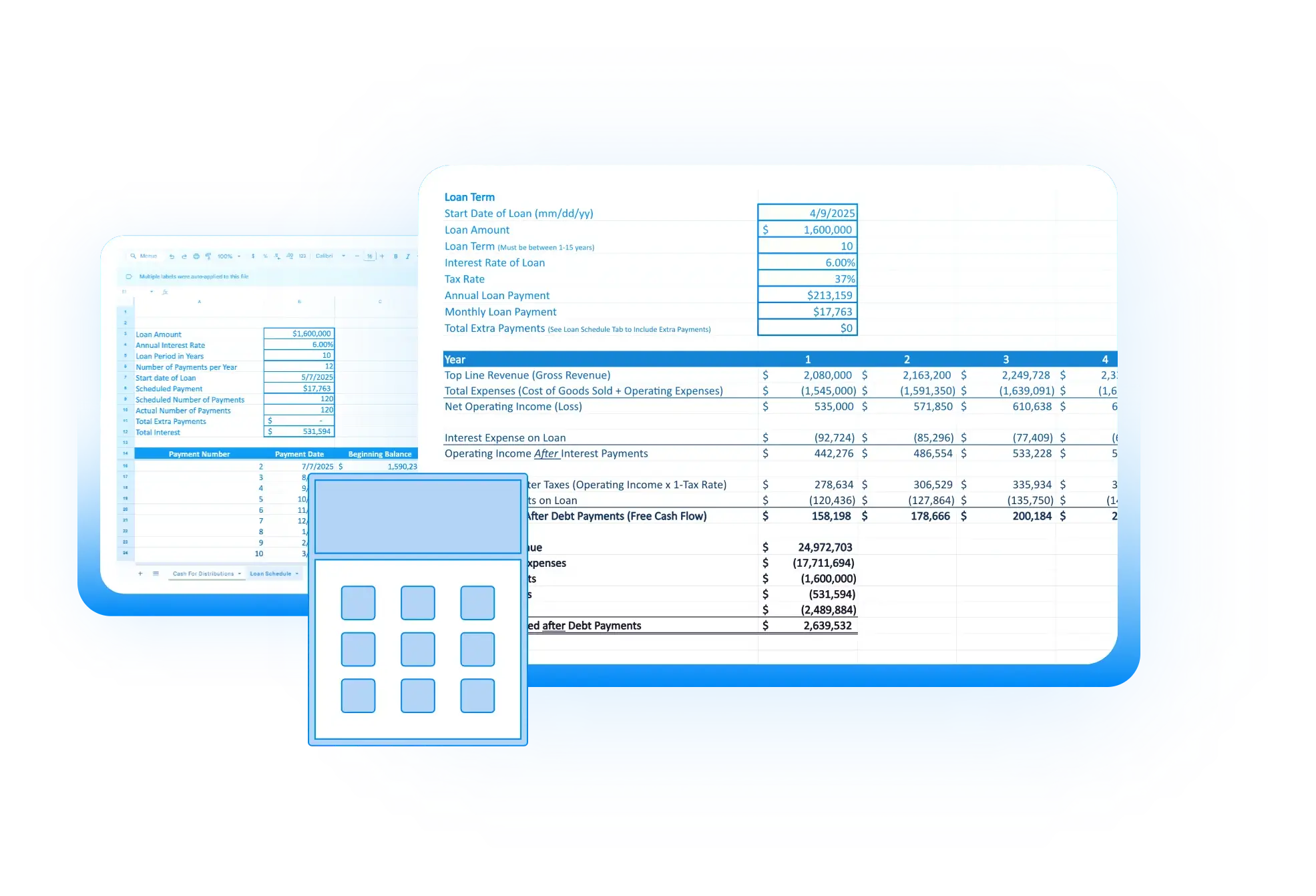
Download the Practice Owner’s Financial Toolkit
20/20 Money Ultimate Financial Success Masterclass
Check out Adam’s new book: How to Buy an Optometry Practice
—————————————————————————————
Please rate and subscribe to 20/20 Money on these platforms
Spotify
—————————————————————————————
For past episodes of 20/20 Money with full companion show notes, please check out our episode archive here!
The Optometry Success Podcast
Subscribe on Apple Podcasts: https://bit.ly/4tttng6
Subscribe on Spotify: https://bit.ly/4tuf0YM
Episode Transcript:
Adam Cmejla (01:05.77)
Welcome to another episode of 20/20 Money. The business of optometry joining me for today’s conversation is Mandy Brown. Mandy, it is good to chat with you again.
Mandy Brown (01:15.417)
Yes, thank you so much for having me. I am so excited to be here.
Adam Cmejla (01:19.342)
It has been a hot minute since you and I have connected. were talking just before we hit record, probably been about nine months or so. And the quick high level journey, if you will, and why we’re having this conversation today is about nine months ago, I found myself as a multi-business owner.Feeling very below the line. That’s a phrase that I will use often times when I talk with practice owners about their best and highest use of time in their business. Quick and dirty inventory. Look at what you’ve spent time doing over the past week. Document that, inventory that, and then on a piece of paper, turn it horizontally, draw a line down the middle of it, put all the things that you are passionate about doing. Put those above the line, and anything that is not energetic, not lifting you up, not in your best and highest use of time in the business, those are those below the line activities. And I joke with people, guess what all of those items below the line turn into? They turn into a job description. And at that time I was finding myself caught in what I’ve affectionately referred to the messy middle.
I just I looked at that below the line activity and I said, this is piling up more and more and more and my existing team is at capacity. I can’t put this on their plate. It’s not the best and highest use of my time. And I think you said something along the lines of, you’d be an idiot not to hire Lexis. Maybe you didn’t use the word idiot. I’ll give you the credit there. You probably didn’t use that word. That’s me saying that.
Mandy Brown (03:56.793)
Yeah, I probably didn’t, but I probably said it would be a thing for sure.
Adam Cmejla (04:01.494)
it’d be a big mistake. Maybe that’s the more PG version, the professional version of that to not consider looking at Lexis, which was your right-hand person, again, you can speak to that maybe a little bit more if you’d like, at the company that you were previously at. And the long and short of it was that Lexis has been an absolutely phenomenal addition to the team. And I’m not just saying that because I know she’ll listen to the episode because she’s very curious to hear how our conversation goes. But she has been a wonderful addition to the team. I’m so grateful for her skill set, for her dedication, commitment and compassion to the work that we’re doing here. You yourself have been on a journey as well on the professional side of things, as well as I assume kind of the personal implications of that as well. Andthat brings us full circle today to talk about what I feel like probably happens, know, the brief abridged story that I shared here in the introduction probably isn’t as, it’s a lot more common than what I think practice owners think. And it’s something that if you leave it unchecked, it can consume you, it can rob you of the joy of business ownership, it can cause businesses to stagnate.and just feel like you are on that hamster wheel. And you have in your professional career and the journey that you’re on right now, your unique skill set is really getting into the operations of a business. And I liked what you said before we hit record, operations touches everything. And it is such a different mindset and a different way of looking at a business as how someone as an owner, as a visionary would look at a business versus how somebody as an operations looks at a business. And so I’m just excited to explore with you here today what it means to run a business from an operations point of view.
Adam Cmejla (00:01.657)
So I guess with that, again, a bridged backstory as to how you and I have come to be having this conversation here today, where would you, anything that I said that primed the pump and where you’d wanna take the conversation from there, from here.
Mandy Brown (00:17.164)
Yeah, I think something that you said is it’s a different mindset from a business owner to an operator or an operations minded person. I did not realize not everyone thinks the same way I think and I appreciate the business owners and the CEOs that when I’m telling them, okay, these are the things that we need to do to achieve your goals and they say, I hate all of that. That sounds like torture. I now understand that we are all gifted in different ways.
Adam Cmejla (00:52.281)
Well, I think the challenge that practice owners have that are listening to this is, and this is what I will hear from ODs that are in our masterminds, ODs that are our clients when I’m at conferences and talking about the business side of optometry is just that. Like there is a business component to running a practice. And so often I will hear, gosh, I didn’t realize how much of the ownership responsibilities add up.
I’m a clinician. spent all of my years in school going and focusing on the in the business practice. And then there’s the on the business stuff that has to get done because if you don’t do it, there’s no direction. There’s no structure. There’s no alignment of expectations and intentions with the team. And so there has to be some type of glue. has to be some type, maybe glue is the wrong word or the wrong metaphor.
But there needs to be something in the business, some type of bridge, some type of conduit to connect the practice owner, both from a visionary as well as like literally just a day to day business, because I’ll joke with it with practice owners. It’s very difficult for you to have an understanding of what’s happening in your business, because if your practice is fired on all cylinders, you’re in an exam lane almost all day, every day, seeing patients going back and forth between one or maybe multiple exam lanes.
getting a true pulse on the business, I feel like can almost be amplified in a very successful practice and the stress of success can be difficult because how do you get that, again, I’ll use that word, the pulse on the business. I didn’t have a question in that, more of an observation. in…
Mandy Brown (02:36.514)
Right.
Adam Cmejla (02:44.579)
Going back to what you had said from an operations standpoint, not everybody thinks like that. What do you see as being the biggest differences between how owners think, how visionaries think, and how you as an operator, as an operations person think?
Mandy Brown (03:00.686)
Yeah, so first I want to affirm anyone that thinks everything I say sounds like torture and sounds like an awful idea and sounds like a lot of work because you are supposed to feel that way as a practice owner and what you’re doing. That’s not what you went to school for. That’s not what you wanted to do. And so I want to affirm if that sounds awful. That’s good. That’s good. That means you’re in the right seat. And then for anyone that ever listens, if you’re a CEO or a practice owner and all that sounds great, then you’re probably actually not in the right seat and you should be more in operation. yeah, think it’s just a different mindset and a practice owner is going to really, they’re gonna think big picture. This is what I want my practice to be. I wanna be able to do this and do this and they should be having dreams and goals and visions that are way bigger than.
That should be what makes the practice successful is someone is constantly dreaming in vision casting and thinking about what you can do to make things better. Whereas an operator or an operations person, they’re thinking about the how are we going to make that happen? How are we going to have the systems in place to do that? How are we going to equip the people?
to do that, are we gonna have the right people in the right place? So they’re really thinking about your people, your systems, maybe some of the extra stuff that you don’t need that maybe it was right at the time, the expired systems, you’ve tried that, it served for season, but your practice has grown beyond that. And they’re gonna be the ones to identify that. And so I think…
Practice owner is doing exactly what you need to do in your lane and vision casting and dreaming and then you have someone saying, and this is how we’re going to do it. And I think, I don’t know the size of the practices of your listeners, but I think that can come slowly. If you’re a smaller practice, right, that can be.
more of an executive assistant or an ops coordinator or something like that. And then as you need more strategic help, more metrics and needing to develop the people and more organizational.
Adam Cmejla (05:28.367)
scaffolding or infrastructure around it. Yeah.
Mandy Brown (05:29.612)
structuring, yeah, like then you need someone that’s, you know, higher level leadership. And with that, you know, depending on the size of the practice, there are so many options through that, but yeah, it could look so different for everyone depending on where they are in their practice.
Adam Cmejla (05:48.783)
I remember for me it was a hard, hard is the wrong word. It was almost a disbelief when I went through the process of looking at all of the things that were, like again, I’ll use that word, the messy middle that were on my list. And I thought, why would I subject somebody to this? Why would I, who, like.
This seems, this is tor, it’s like, I automatically assume that because I think it’s torturous for me and it’s painful and I would rather, I don’t know, think of some other activity that you just loath to do that because I felt this way, everybody feels this way. So it’s almost punishment to make somebody, make is the wrong word, but you like create a role in an organization around this. And I’m very intentional. I want to pause here briefly and just say, I’m very intentional about using the word role and not job.
and not position. just, and that’s, I think a little bit of a testament to the coaching and the philosophy that I have learned through my time at strategic coach in creating an organization that essentially kind of acts like a play where you have front stage, backstage, and everybody has a role in the production of the company. An organization of business is no different than that. And so when I look at this role, I’m like, you mean there’s somebody out there? This is actually like,
and they enjoy this and so I don’t know if there’s if you have additional thoughts on that but I want to give people permission to say it’s okay to think about utilizing these ideas and these activities and these responsibilities as a job description for somebody else because just because you don’t enjoy doing it doesn’t mean that there isn’t a right fit person out there for that role.
Mandy Brown (07:35.798)
Yeah, and as we were talking about the right fit for you in the role, you, I don’t know if you remember this, but one of the things that you kept saying is, so I can give full ownership. I wanna be able to give full ownership, specifically about your EA, but I wanna be able to give full ownership. If I say this is yours to own, you’re telling me they will own it. I’m like, yeah, yeah. And I think really that. And this goes actually to just to every business owner, practice owner. It’s really getting past that, doing that mindset shift of you can give full ownership of the outcome to someone. you, anyone in the office, whoever your number two is at that time, depending on who that is.
And you can say, want you to own this. If there’s an issue, please bring it to me. And explaining what that could look like. But people can own the outcome. You just have to lay it out. And as practice owners and business owners, you’re the visionary and you can easily delegate that vision. It’s because you’re a visionary.
Adam Cmejla (08:53.839)
I want to lean into that a little bit more, if you don’t mind, because I think the common misconception, or maybe not a common, maybe it is common, misconception that people will have is they think my way equals right. Or maybe said a little bit differently, if somebody doesn’t do it the way that I would have done it, therefore it is wrong. Can you talk a little bit more about ways in which, and get as practical as you can or you want to in this dialogue here? How is that done successfully? Because I feel like there might be practice owners listening that would say, I’d love to be able to offload a project or something that needs to get done in the practice. And I like what you had said. And I think this is certainly part of the conversation, defining the outcome. How are we defining success? But can you talk a little bit more about how business owners can do that successfully and maybe piggyback on top of that, the antithesis of that? How do they do it wrong? What mistakes can people make in that process?
Mandy Brown (09:57.356)
Yeah, if you have a specific example where maybe you’ve heard something in any groups, I would be happy to use a very realistic example or I can speak high level.
Adam Cmejla (10:09.025)
Well, let’s talk about… here’s one. Well, and… Okay, let’s try that again.
Well, so here’s one. What about everybody, every OD’s favorite subject or favorite metric, favorite KPI to track capture rate? How do we increase capture rates? So patients come in, they go through the eye exam, they get there, they’re seeing the doctor. And from that point forward, after they leave the exam lane, now in a traditional, in the best case scenario, there is a seamless handoff from the doctor into optical, the doctor.
tells the optician, is what I’ve prescribed for Mary Smith. Mary spends a lot of time behind the computer and she also drives at night and so we’re recommending blah, blah, blah, blah, blah. And the patient will now work with the optician to essentially fill that prescription in the optical as opposed to what the biggest or one of the biggest friction points in practices is a patient saying.
Thanks Dr. Brown for the exam here. Can I have my script please because I want to go to ABC online optical and have them fill my glasses. So the doctor would say, how do we increase capture rate in the office because it keeps sliding in the wrong direction.
Mandy Brown (11:30.988)
Yeah, okay, that’s great. And so I would say there needs to be someone that you can ask, what is our current process, just to understand it. And I think probably a common way this is communicated is, I wanna be able to meet with a patient and then I’m gonna give them to you and you’re gonna do this and then you’re gonna go here and they’re gonna do this.
But if you’re not understanding the flow of how everyone is working in the office and maybe the handoff and who’s doing what, that might not make sense. And so I think the first thing you can do is find your, I would assume most people have an office manager.
Adam Cmejla (12:12.301)
Yeah, for the most part, to your point earlier, younger practices, cold starts, or within the first two to three years of starting the practice, that might be a role still yet to be filled, but most established practice owners will have some type of front office management that is loosely, if I may say so, overseeing optical, being the patient coordinator, greeting, et cetera.
Mandy Brown (12:38.134)
Right, okay, so I assume a common challenge that a practice owner might have is they’re gonna explain to, let’s say, office manager, this is what I want done. I want to do this, and then I’m gonna hand off to this person, and then I want you to do this, and then I want you to do this. And it’s like, cool, everyone now knows their role, their job. However, what that doesn’t communicate to your team,
or your office staff is why that’s being done. What is missing? And so if you can, and this is where an operations-minded person would come in and be like, okay, well, what are we trying to achieve here? And then maybe what are some small in-between metrics that we can capture that, you know.
You have OKRs, right? Objective Key Results, those are kind of the behaviors that help you meet your KPIs. So maybe throw in some OKRs for each person that help reach that ultimate KPI. But whoever your number two person is that’s gonna be able to own this because you’re gonna delegate ownership of it.
explaining to them this is why, this is how it impacts the business if we don’t have the right capture rate, if we’re not moving the patient along and they’re not ordering their prescription through us. This is what happens here. And so I wanna make sure that X percent of patients order their prescription through here and they don’t go elsewhere. So we can do whatever that would be. And so just actually explaining more of the impact.
and the why behind that particular goal. And giving everyone a piece of it so they have ownership in that even if it’s someone that’s opening the door. It doesn’t matter what it is, hey, did you make sure you got your prescription filled at the desk? It could be everyone’s part of that and giving them the why behind it.
Adam Cmejla (14:42.883)
Yeah, there’s, think there is a, there’s a delineation that can happen in this process from the strategic observation of what are the KPIs, the key performance indicators in the practice that we need to be focused on. And then what are the, to dovetail into that, the objectives and key results that are demonstrative of achieving those KPIs. And then there’s the tactical implementation of that.
And I think that’s a clear line of demarcation in our conversation here where the person that is responsible for the management of the project may not also be the same person that’s responsible for the actual tactical training of how we’re going to improve that. And I think that’s an important observation that recognizing where somebody’s skill set is and where it’s not, and for the owner to understand
Yeah. How do you inventory or I shouldn’t say how do you, how do you, maybe that is a question that we can explore, but knowing that you may not have, or the people in the office may not have all the answers that you need. And you may need to go to outside resources. You may need to get outside sales training. You might need to get optical dispensing training and conversation training. Again, all those are just fancy ways for sales training because at the end of the day, yes, that’s what it is. Everything in the patient experience, everything in the patient journey.
is in some way, or form a sales process. And again, I’m not just singling out optometry. The same thing is true in dentistry. The same thing is true in any business, any business. Forget medical modality. Anything is about sales. I want owners to recognize that, understand that, that it’s not a dirty word. Again, I don’t want to detract or detour too far off of our conversation here and turn this into a sales conversation.
But we have to understand where the strengths lie in the organization, understand the limitations of those strengths. And then if we need to bring in kind of call for reinforcement, so to speak, know where we go, know where we go outside the organization for that. But I think to circle back around to what you’re saying, just because you would be bringing an outside resource in doesn’t mean that the person, the office manager still can’t own the project. Would you agree?
Mandy Brown (17:03.992)
Correct, Yeah, and I think everything in operations, you said this isn’t a focus on sales, but everything in operations, the whole point of it is to make sure that you are at maximum profitability for what you are doing, whether that is with your systems, with your people. So everything is, it is centered around profitability and how we can obviously make more money. That’s what we’re in this for.
Adam Cmejla (17:05.708)
Okay, okay.
Mandy Brown (17:33.71)
And that’s, yeah, it’s just not, that’s a good focus.
Adam Cmejla (18:28.43)
Okay.
So I’d like to, I’ll bring us back up for air. I know it took us on a little bit of a detour there getting, well detailed in the detour, but bringing us back on track here, I wanna shift and talk about just the beginning of this, like the genesis of realizing when somebody is, or when their business has essentially outgrown them, right? Because we talked earlier, a young practice or a smaller business,
just the moving parts and the responsibilities in the business may, it may not have outgrown the owner, but eventually, right, with all the additional requests and requirements of running a business, we don’t get more time with those requirements and responsibilities. We all still only have 168 hours in a week to allocate and spend as we see fit. And so eventually, as businesses grow, one of two choices have to be made. You either,
are consumed by your business and have no free time. And I feel like maybe sometimes what can happen there is now the business starts happening to the owner and they will start feeling almost attacked by their business. And that can show up in a way in ways of, my, my capture rate is going down or how can I be profitable or people are buying more online or the competition is like.
All of these things are, dare I say, attacking the practice owner. And in the absence of having that space and agency, they may feel like the business has been consuming them. Any, in your experience, how does somebody…
Adam Cmejla (20:12.441)
Be cognizant of that and realize when it’s time to call in reinforcements, like whether that’s internally or we need to look externally to bring in some type of either project-based or ongoing fractional relationship. How do you stay in front of that?
Mandy Brown (20:32.29)
Yeah, I think every practice owner is a leader and through leadership you have to practice self-awareness. I hope everyone is at least taking time quarterly to sit and think through what has happened and what do need to do moving forward. And if in that time you feel everything is happening, you said it perfectly, everything’s happening at you and to you,
then things are a little out of control and you need reinforcements. If you can’t sit there and think through what’s the next best step here, what’s the first thing I can do? I’m a control freak. I’m sure we’re in, know, great company here. Yeah, yeah. And so if I can’t, with my question, what can I control? Because really we can’t control so much as business owners and practice owners.
Adam Cmejla (21:18.831)
We’re in good company, yeah.
Mandy Brown (21:32.576)
It’s just finding the clarity of what is the best next step. So if you can’t figure that out, I hope everyone is least part of some mentorship or some type of peer accountability, but if you can’t figure out the next best step to get everything, get something back on track, then you’re just in an unhealthy mindset and you’re not gonna be the person to turn it around. And so you’re going to need reinforcement. I think sometimes,
Adam Cmejla (21:46.543)
Mm-hmm.
Mandy Brown (22:03.246)
As leaders, just, honestly can have a little bit of a burnout and it’s okay for that to be for a season. It really is, but I think if it’s extended and it’s, you know, we’re going past a quarter, we need to do something about it. And so I would say a quarter is, is your limit. Yeah, it is a long time, but you know, a quarter happens so fast to us. I mean, it really does.
Adam Cmejla (22:22.063)
That’s a long time.
Adam Cmejla (22:30.318)
Yeah.
Mandy Brown (22:32.718)
So I would say if you really can’t figure out the best next step, if you can’t figure out, okay, I actually feel like we can get on a better trajectory with this one thing, then you need to call in reinforcements. And the market out there is great. There’s so many affordable and fractional roles that can support you. And that can be a great just short-term investment. You don’t have to make this long-term investment and then figure out what you need to do from there.
Adam Cmejla (23:03.151)
I think it is a…
It’s something that burnout gets talked about.
And it can be something that can insidiously sneak up on you. And, I’m, again, I’m, I’m just being completely honest and it been there, done that, the t-shirt in a couple of different ways. And the challenge with that, again, just speaking as a party of one here from my own experience has the hard part in that is.
Mandy Brown (23:29.101)
Yeah.
Adam Cmejla (23:43.413)
recognizing that you need to take a little time. see, the funny part is I’m saying this right now and I know Lexis is going to listen to this episode and I know she’s grinning right now. Because what I’m about to, because she already knows what I’m about to say, likely, because what I’m about to say is that for me, taking time is very difficult. Taking time off and taking time away from the business is a very difficult thing for me to do. There’s guilt.
There is a sense of obligation. There is a sense of commitment to what you have stated publicly, to what you are doing, to keep that momentum going and to actually do that process. And look, I’ll be the first to say I am an incredibly…
Adam Cmejla (24:37.423)
What’s the word I want to use? I’m grateful that I am in a profession that… Maybe let me say this differently. For practice owners listening right now, it can feel exponentially harder to do because, and I’m agreeing with this and maybe we want to explore this, maybe we don’t. I guess we will because I’ll put it out there.
The challenge that practice owners are likely hearing right now, if you are feeling like you have been in a place of burnout is number one, go back and listen to the episode that I did. looking at the release schedule here on my other screen, I’m going to say three ish weeks ago when I had a conversation with Dr. Jeremy Siano who took a, I believe it was a six week sabbatical out of the practice. And, and look, I’m not
This is in content creation. is the tease, right? If you want to know all the details of it, go back and listen to that episode. If you’re a new listener to the show, it’ll be in the table of contents. Just scroll back a couple of weeks, go listen to that episode because all the details of how Jeremy prepared himself, his family, his business for that was in that detail or was in that episode. And look, I’m not saying that every single practice owner or every single business owner needs to take a sabbatical where you need to take a month, six weeks, two months off, whatever that might be. Because for practice owners,
I get it, especially if you’re the only provider in the practice, if you stop seeing patients, revenue stops. And that is a huge burden that I understand and I want to acknowledge here. And short of finding other providers, which is a very logical and pragmatic solution to free yourself up in the business and create a little bit more flexibility in the business for you as the owner, short of doing that, I don’t have another solution for you.
but I want to acknowledge to practice owners right now. It’s not easy. We get it. We understand it. But the reason that we’re having this conversation here today is to help give you some scaffolding. I’ll use that word again on how to extricate yourself a little bit from the business and realize that if it’s meant to be, it doesn’t have to be up to you as, as my parents had a phrase when I was growing up in their business. if it’s meant to be, it’s up to me.
Adam Cmejla (27:00.489)
And they did everything, everything in the business. Mom was doing books at 11 o’clock at night, not because she wanted to, but because dad wanted her to. And they didn’t want to outs… I could be on a couch for this conversation, but… My point is, as a business owner, don’t feel like it always has to be up to you.
Mandy Brown (27:24.098)
Yeah, and I think for those solo practice owners, when you can’t take the sabbatical, take the operations sabbatical. Just, you know, I…
I try to think through who do I want in specific roles. What characteristics am I looking for? And I will tell you, someone for me, when I am trying to hire a leader that, like I just want someone that’s going to run with things. And I feel like every practice owner feels that way. So someone told me one time, and this is now how I hire people, that I would rather tame a stallion than push a donkey.
Adam Cmejla (28:09.613)
I like it.
Mandy Brown (28:09.614)
hire that person, hire your stallion, tell your stallion what you want accomplished so you can only just worry about the patients. And if you can take a sabbatical that way, do it. But it is key to finding that right person and what complements what you are looking for.
and it needs to be a stallion and not a donkey. Because if it’s a donkey, it’s gonna feel so painful and there are some people out there that are like, list takers, I can make this happen for you, but I’m need you to walk me through how. And so as you are vetting for whoever’s gonna help you take a step away from operations, you ask them how they’re going to do it. That’s the best way to vet.
because you don’t wanna be the one to do it, the how. You just wanna be in your lane of vision casting, of goal setting, and they go and how it. I will say, if you do get the right person, be prepared for changes. Hopefully, whoever’s coming in to help you take a step away from this side of the business, they’re gonna identify things that you can stop doing. That’s one of the first things I look for. What can we stop doing?
What are we doing that’s actually wasting resources, wasting money, payroll, dollars? Let’s get rid of it. Are we actually with the right vendors? So just know that there might be some suggested changes and often what I do, which is super painful, I go in and say, don’t have the right people in the right seat. You might have the right people, but there’s a different seat for them and you’re gonna maximize what they’re able to do in a different seat.
But all that at end of the day helps you just stay in your lane and what you can do. So just know that with someone coming in, there will be change.
Adam Cmejla (30:09.891)
This is, I will give you the ripcord option of saying, of agreeing with me. Because it seems like an impossible question to ask. How do you know if you have the wrong people on the wrong seat on the bus? And I’ll use some Jim Collins in there from good to great, getting the right people in the right seat and making sure the bus is going in the right direction. I’m paraphrasing his philosophy there, but I feel like it’s,
people will think of and be listening and say, well, that just seems so subjective. How do I know if I have the right people on? How do I know if I have the right players, the right people in the right roles? Any thoughts that you’d want to explore on how you get a little bit more clarity and confidence around that?
Mandy Brown (30:53.571)
Yeah.
Yeah, it’s real. Just be ready for this. It’s profound. If your gut is telling you…
That’s it! No, I mean, truly. Yes.
Adam Cmejla (31:09.199)
Can you build that in a spreadsheet, Mandy? Can we put a gut factor? What’s the Excel shortcut key for?
Mandy Brown (31:14.85)
The data says if your stomach drops every time you see them, it’s time. No, no, it truly, it’s a painful relationship, right? You know, again, taming a stallion, pushing a donkey. If it’s a donkey in their role, they might not be a donkey in another role. That just means it’s not the right role.
Adam Cmejla (31:21.507)
Yeah.
Mandy Brown (31:40.574)
No one wants to operate as a donkey. They want to be able to run with things and own things and people want to feel fulfilled. And I think, if you are seeing that you are having to keep pushing someone to do something, they’re not in the right seat. They’re not in right seat. People don’t have to live for their job and their role and what they’re doing. That’s not necessary. But if they’re working pretty autonomously,
Adam Cmejla (31:56.143)
Hmm.
Mandy Brown (32:11.182)
You enjoy conversing with that person where they are and they bring something to you. You’re not like, ugh, what now? Right? Those are kind of your indicators. It’s, know, it’s so profound, so profound, but that should not be a repetitive feeling. That can be a season feeling. you know, again, everything is acceptable in a season. If it’s a repetitive thing, probably not in the right seat.
Adam Cmejla (32:39.983)
Switching gears slightly here, how do you think about the cadence in which you were meeting with your leadership team? How often should you, right? Because going back to what you had said earlier, it’s awesome if you have the ability to do that handoff and somebody takes ownership of a project and you’ve done what you need to do as far as defining success and why we’re doing this and why it’s important to the business, et cetera. It’s not just a.
All right, I dusted my hands of it and I’m never gonna check into it again and I just trust that person implicitly. Like we still want to meet to make sure that there’s alignment of expectations, alignment of intentions, that they feel supported in the role as your ops leader. Thoughts on that cadence, what that structure looks like to make sure that again, everybody’s in lockstep.
Mandy Brown (33:31.276)
Yeah, and assuming again, we have practice owners that are newer and way more seasoned. I would say newer or middle of the road timing weekly. You need to meet with them weekly and through that, because that’s also gonna feel painful. People are gonna be like, I have to pause weekly and really like meet with some, that’s hard because you feel like there are other things that you need to be doing. But by equipping and investing in this one person who is basically your number two for,
whatever season you’re in, that is the most important person to invest time in because they’re the ones removing things from your plate, your mental load and giving you more of that mental capacity and being able to focus on what you actually want to focus on. So I would say weekly. For those, you know, I know there are practice owners that have had the office mander for 20 years. Yeah.
Adam Cmejla (34:06.639)
Mm-hmm.
Mandy Brown (34:27.84)
I mean monthly might be good because they’re in a good flow. But if you are meeting and it can change, hey, we’re going to actually focus on a different goal for this month. Let’s meet weekly. But what I want to say is in that you assign ownership of running that to your number two. It is not for you Adam to come in and say, all right, so this is everything we need to do. Nope.
No, that’s not what should be done. It’s, okay, my number two brings to me, since we last talked, these are the things that I focused on, these are the outcomes, these are the results. And then you, as the practice owner, you are saying, awesome, this is great, or asking more questions, gaining clarity, vision casting into what’s next, clarifying, maybe something was off. so through that, you have to communicate.
We’re gonna meet weekly, but you’re gonna own and drive this conversation and keep me in the know of what’s going on based on the conversations we’re having. It’s not for you to bring everything and again, own one more thing.
Adam Cmejla (35:38.425)
I appreciate you making that distinction because there might be practice owners listening that infer just that. It’s like, okay, great. So I have another one-to-one that I have to not only attend, but prepare for as well. And what I’m hearing you say is, what I’m hearing you say, which I can attest to as well, given the common denominator on a relationship with Lexis is that was a welcomed shift in.
attending our one-to-ones and seeing the details and seeing the agenda and the progress reports on what we have been working on. And I almost felt guilty. I’m like, you just need my input? Like, that’s it? I can do that. That’s awesome. Like this is great. And it’s a burden that’s lifted off of your shoulders as the owner to realize that
Mandy Brown (36:17.367)
You
Mandy Brown (36:22.549)
Mm-hmm.
Adam Cmejla (36:30.067)
you can allocate a little bit more of your time and energy on your unique ability in the business or the revenue generating activities that keep this flywheel going. And they’re in their role of doing what they do best.
Mandy Brown (36:47.34)
Yeah, you’re giving them purpose and they want to be able to do that for you. And it’s typically, you know, the leader’s responsibility to give them that permission to run with it. And I think that’s something hard is.
Typically, people are going to need the permission from us. Hey, I want you to own this and that’s going to look like this and this can adjust however you want. Please run with it. I don’t want to own this. I don’t want to run this one on one. I don’t want to come with the agenda. want you, but you do have to communicate that. And there is Brene Brown, clear as kind. And I operate that way.
Adam Cmejla (37:29.024)
Mmm, yeah.
Mandy Brown (37:32.384)
clear as kind, even if it’s not, and even owning, I don’t even know the best way to say this, but ultimately what I need you to hear is this and just own it. But just making sure that they truly understand what you’re wanting, what you’re needing, and not having to read between the lines. And if they don’t understand, then there was a disconnect somehow. And then if they repeatedly don’t understand, then maybe they’re not in the right seat.
Adam Cmejla (38:00.087)
Well, and I feel like to your point to add on just a little bit to that, it’s important to have those expectations and conversations. I will just say at the beginning, right, whether you’re shifting the roles and responsibilities with somebody that’s already sitting in that seat or you’re making the intentional decision as the practice owner to go out and find an additional team member to bring into the business to sit in this role at the beginning, at the genesis of that relationship.
set those expectations and have that clear communication to make sure that there is that open line of dialogue that I want you to know that I will communicate effective, that I will be clear and I need you to return that favor. If I’m not being clear, don’t hold back or don’t be reserved just because I’m your quote unquote leader or your boss in this situation. if this person is going to be as effective as they need to be in this role, they need to have
the comfort, I guess might be the right word, the peace of mind, the agency, I’ll use that word again to know that they can come to you as the leader with questions properly thought out and identified so that they can be empowered to do their job well and fill their role well.
Mandy Brown (39:20.812)
Yeah. And again, something that I think maybe people don’t realize is part of operations, which is why we were talking beforehand, how HR somehow is under operations. You know, it just depends what it is, but the feedback loop on that is so important. So if you do start something like that and you start your one-on-ones and you delegate the ownership of something, when they do that well,
Adam Cmejla (39:31.865)
Ha ha.
Mandy Brown (39:50.346)
celebrate that. That was exactly what I’m looking for. Continue doing it that way. Or if not, hey, we missed the mark on what owning this looks like. Let’s take a step back and figure out what I feel like owning this looks like and then what you thought it could be. And then let’s just bridge that. Let’s figure it out now because you don’t want to continue.
Adam Cmejla (39:51.343)
Hmm.
Mandy Brown (40:13.708)
down a painful path and you just gotta get it out. So that feedback loop is huge, the constructive and the praising because if you keep saying, keep doing it that way, that’s what they’re going to do. And so that does need to be celebrated.
Adam Cmejla (40:23.907)
Yeah. Yeah.
What are some of your favorite tools or platforms to track all of this progress, right? Because I assume that you’re operating from the principle of we can’t just have one-to-one meetings and then there’s no centralized repository of the resources, the information, the progress reports, et cetera. Any specific platforms, I have a couple that I’ll share, but anything from your perspective that you’ve used or that you like that do a good job of managing these things?
Mandy Brown (40:54.252)
Yeah, mean… capturing it.
Adam Cmejla (40:55.105)
Managing might be the wrong word, capturing.
Mandy Brown (40:58.542)
You know my favorite are any you know HR systems where they they are actually built to create one-on-one templates But if we don’t we you don’t even have to be fancy. It can be a Google sheet. It can be a Google Doc it can be Google tasks if you are you know, I don’t know if people are in Windows more Windows heavy, but One-on-one agendas if you are using the Google suite Google keep is amazing It’s really really great
Adam Cmejla (41:26.584)
Hmm.
Mandy Brown (41:28.636)
and then using Google tasks to like assign different tasks also awesome. So it can be very simplified. It does not have to be complicated. But there are some HR systems out there if you have a more developed HR department that are amazing as well.
Adam Cmejla (41:45.463)
Okay. Okay. My favorite that we’ve, we’ve used for years has been more from a project management point of view, a sauna. We’ve used a sauna and we’ve used that just specifically because in all the things that you’ve mentioned as well are certainly capable and, and able to do this. We’re a remote team. I mean, everybody in our organization is in a different state, not to mention. So being able to collaborate, we use the phrase independently collaborate.
Mandy Brown (41:52.92)
Yeah.
Adam Cmejla (42:13.127)
We all need to be in the same page. We need some type of central repository, some type of environment where we can all gather our thoughts and ideas and put them down on paper and make sure that we’re capturing all of this so that each one of us can fill the role that we need to do on the specific project. So Asana, Trello, those are two relatively easy or…
Mandy Brown (42:31.95)
Yeah.
Adam Cmejla (42:38.017)
You know, the learning curve isn’t as steep to use there, to use those, to use those platforms. Or to your point, don’t let perfection be the enemy of progress here. If it’s a simple Google sheet, if it’s a Google doc that you’re using and you’ve, you’re already in a Google environment where you can use Google tasks, great. Just capture it somewhere.
Mandy Brown (42:40.62)
Right.
Mandy Brown (42:55.33)
Yeah, I have my whole, I’m on the softball board here locally and it’s January, we’re about to, registration’s coming, evals, we’re going, and I put our entire season into a Google Sheet because we don’t, the softball board doesn’t have much.
Adam Cmejla (43:10.691)
Mm-hmm.
Mandy Brown (43:12.142)
everyone’s assigned their tasks, incomplete, in progress, completed. You can build out great things and just keep it simple until it grows to a point that you need something. Asana is great if you like lists. Trello is more visual friendly. Notion is so fun. If anyone has used Notion,
Adam Cmejla (43:29.165)
Notion’s dangerous. I have found Notion to be dangerous. I have a very weird mind, Mandy, where I can, maybe every business owner feels this way, so forgive me if I’m, or correct me if I’m wrong in this. I feel like I can sit on both sides of the fence. I have an ops mind, maybe a little bit more than others, and I say that only because I dove into Notion a little bit years ago, and it blew my mind to the point that I got lost in it and realized.
Mandy Brown (43:31.926)
Have fun!
Adam Cmejla (43:56.153)
Holy buckets, there is no end in sight on what you can do with Notion. And I got overwhelmed pretty quickly on it. That was the limiting factor. like, OK, this is not your MO, not what you want to be doing. But holy, there’s a lot of capability with that.
Mandy Brown (44:10.23)
Yeah, it’s really fun. It’s really fun.
Adam Cmejla (44:12.547)
I’m glad you use that word fun. I would choose a different word, but I guess that’s why we are very different in our… Mandy, this has been fun. Closing thoughts from your point of view. I’ll ask you if there’s any close… Or if you have any closing thoughts, I’d love to hear them. From my perspective, I think…
Mandy Brown (44:18.464)
Yes, yes, exactly, exactly.
Adam Cmejla (44:37.301)
My NBS would be for a practice owner right now, if you’re sitting there feeling like you are on the precipice of using that word overwhelmed or drowning in your business or starting to, dare I say, even resent your business, you’re probably past the point of needing to take action. And so take that next best step of the simple inventory. Just, you can’t improve what you don’t measure and what gets measured gets managed. so just for the next week,
just document what you are spending your time doing and inventorying what those are and see if you can just start to get a little bit more clarity on where in your business you could use some reinforcements. So that would be my NBS. I’ll pass the proverbial baton over to you, Mandy. Any final closing thoughts or action steps from your point of view?
Mandy Brown (45:26.55)
Yes, definitely exactly what you said. Just take a week to write that stuff down. Or if that is even too overwhelming. Because I feel like sometimes that is. Think through just the one pain point you have in your practice right now and seek out that number two. Even if it’s your spouse, another optometrist, whoever that is.
And just try to solve that one thing. Feel like you have a little bit of control over, we can make this better. Just find one thing. And then figure out with your number two how you can improve on that one thing. And that just, that mental, it just provides a little bit of mental relief of like we’re doing something that we’re solving a problem. We’re solving a challenge and that always provides relief.
Mandy, this has been an enjoyable conversation. It did live up to its expectation of what I was hoping it was gonna be as again, very serendipitously how we got connected nine-ish months ago and I’m glad we were able to cover out some time in the calendar to record this conversation. We’ll put links to your LinkedIn profile in the show notes of this episode if anybody’s curious to learn a little bit more about your pedigree and your experience and what you’re up to lately.
Mandy Brown (47:20.822)
Yes, thank you so much. It has really been a pleasure joining. So thank you.
Adam Cmejla (47:24.673)
You are welcome and we will catch everybody on the next episode of 20/20 money, the business of optometry.
Episode Transcript
No transcript available yet.
Share